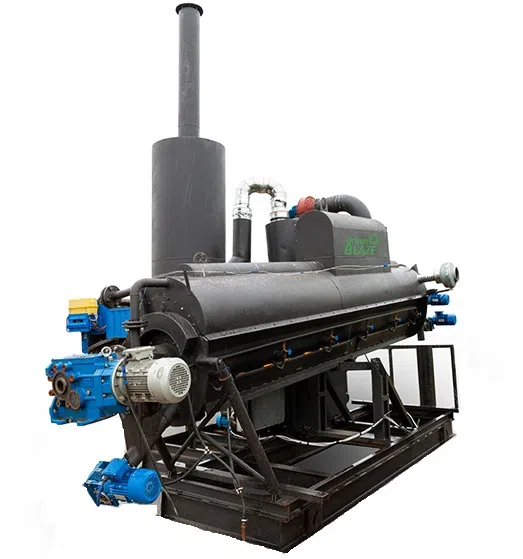
Green Blaze - A unique mobile complex for the processing of municipal solid waste and organic waste

Disposal and Processing
  • Industrial and municipal waste
    Industrial and Municipal Waste
  • Rubber and plastic
    Rubber and Plastic
  • Wood waste
    Wood Waste
  • Agriculture waste
    Agriculture Waste
  • Livestock waste
    Livestock Waste
  • Oil sludge
    Oil Sludge
GreenBLAZE mobile complex
Outcome
  • Electric power
    Electric Power
  • Heat energy
    Heat Energy
  • Distilled water
    Distilled Water
  • Ash residue
    Ash Residue
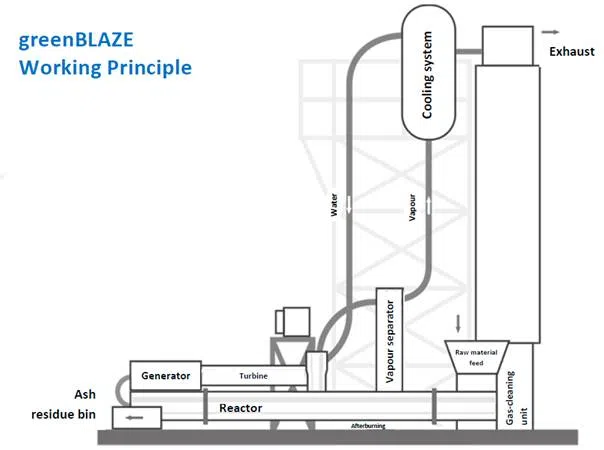
GreenBLAZE - is a universal mobile multifunctional processor featuring no open burning, operated under high-temperature vacuum destruction method

Key Highlights

Environmental safety
Environmental Safety
Due to design features and temperature conditions, the greenBLAZE operation is not based on burning. Instead, the processor decomposes feedstock to the molecular level, completely destroying toxic substances that pollute the environment and affect people and wildlife.
Mobility
MOBILITY
The processor occupies 25 sq.m. and can be installed on movable platforms such as trucks, vessels, or railway platforms.
Self-contained operation
SELF-CONTAINED OPERATION
greenBLAZE requires NO connection to external power sources
Universality
UNIVERSALITY
greenBLAZE does NOT require preliminary waste sorting
GreenBLAZE installation layout

Technical Specifications

Operating parameters of the complex

Single load up to 5 m3/hour
Output power up to 1 MW
Chemical process efficiency 84.4% resource conversion
Time to operational mode 12 hours
Synthesis products consumption for self-heating no more than 15%
Installation dimensions 10,000 mm x 3,000 mm x 3,000 mm
Total installation weight 10,000 kg
Annual operating hours 8,000 - 8,500 hours/year
Estimated service life at least 15 years
Required infrastructure feedstock supply and synthetic product intake
Waste types accepted organic waste: lignin and poultry manure (moisture up to 75%)
plastics, vulcanized rubber, wood waste, oil sludge, PTI, TEO
Service maintenance once per year
Personnel 2 operators per shift
Operating mode continuous and/or 24/7

Application Fields

Waste disposal
Waste Disposal
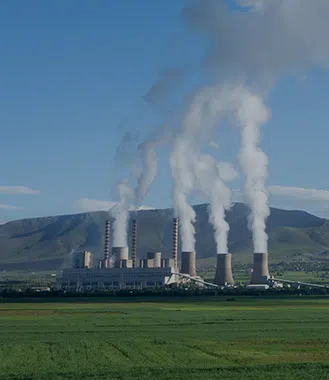
Industrial enterprises
Industrial Enterprises
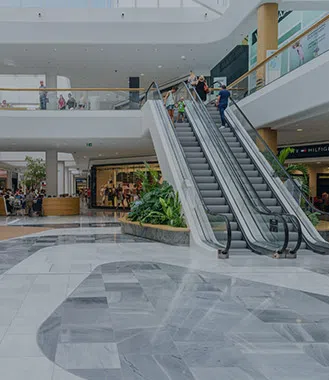
Malls and commercial infrastructure
Malls and Commercial Infrastructure
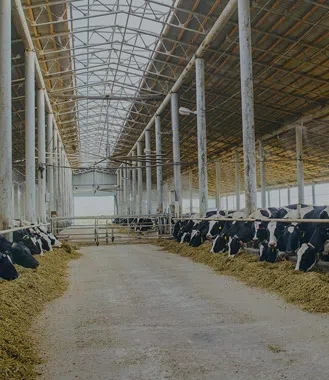
Farming and agriculture
Farming & Agriculture

GreenBLAZE FAQ

How is GreenBLAZE different from conventional waste incineration?
The process is implemented in a closed cycle without open burning. The key principle is high-temperature feedstock decomposition with conversion into useful energy products.
What feedstock types can be processed?
The unit is designed for a broad range of carbon-based materials: municipal waste, plastics, rubber products, wood and agricultural residues, and oil sludge. Final acceptance criteria are defined after feedstock composition analysis.
Is pre-sorting required?
Deep pre-sorting is not required in many scenarios, but project requirements depend on actual feedstock flow and target operation mode. Composition, moisture, particle size, and logistics are fixed during pre-engineering.
What are the output products?
Depending on project configuration and operating mode, outputs may include heat, electric power, fuel fractions, distilled water, and ash residue.
What are the baseline site and operation requirements?
A project needs organized feedstock supply and output handling. Typical operation requires 2 operators per shift, and routine service is usually performed once per year.
How are CAPEX, OPEX, and payback calculated?
Project economics are always site-specific. They depend on feedstock type and volume, target energy product, logistics cost, and loading profile. A reliable model is prepared during project-level techno-economic assessment.
Are there documents for the Russian and EAEU market?
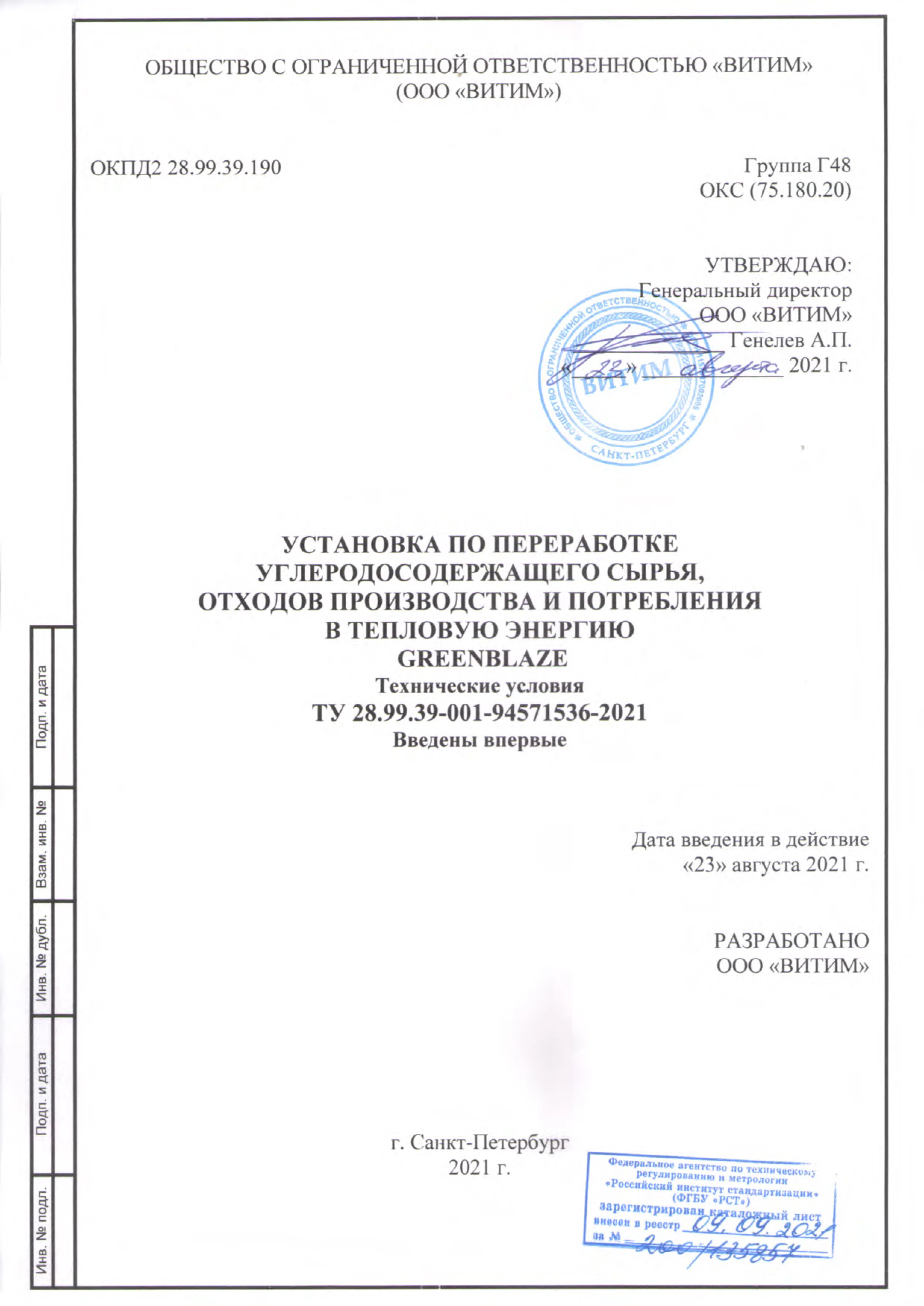
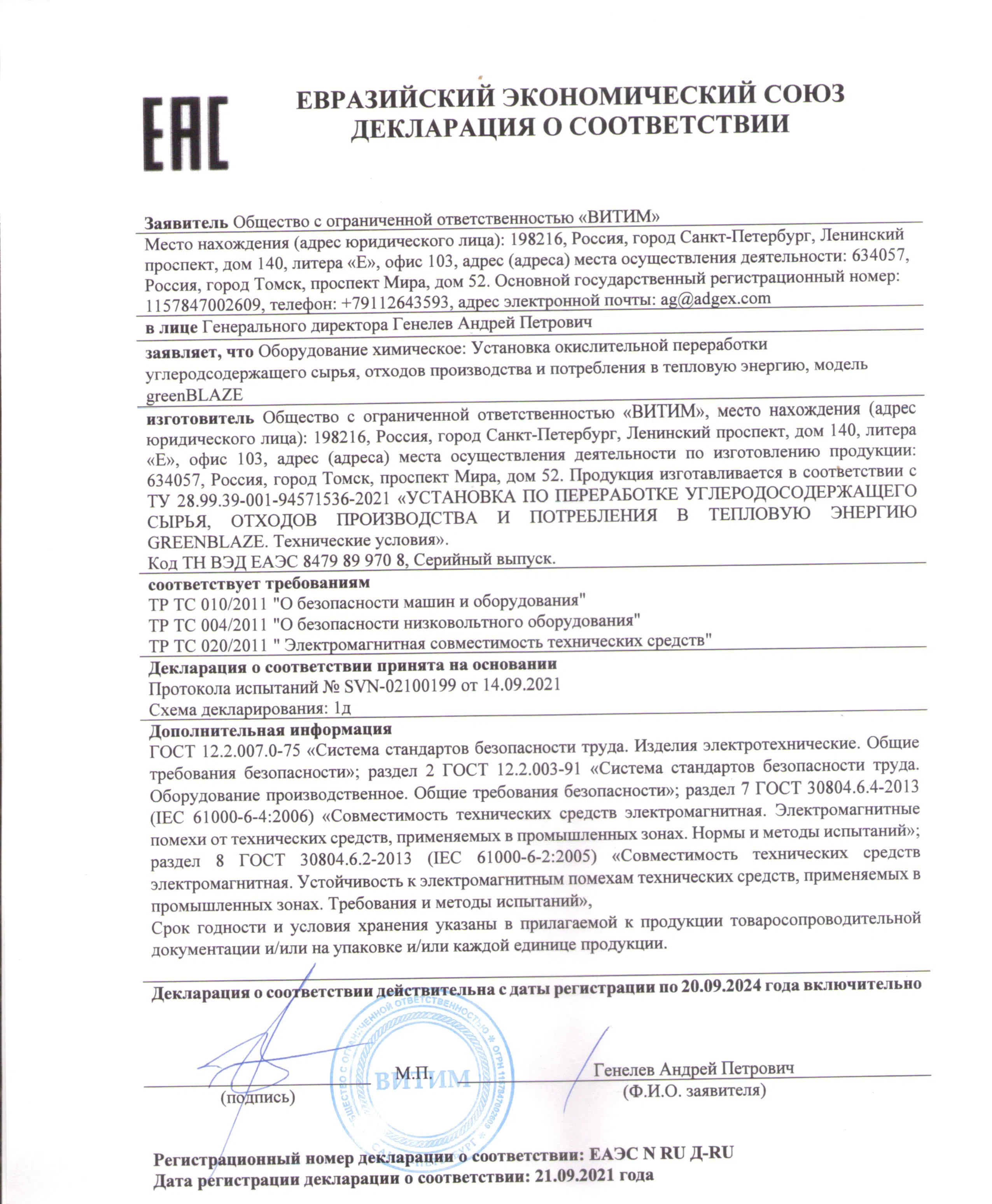
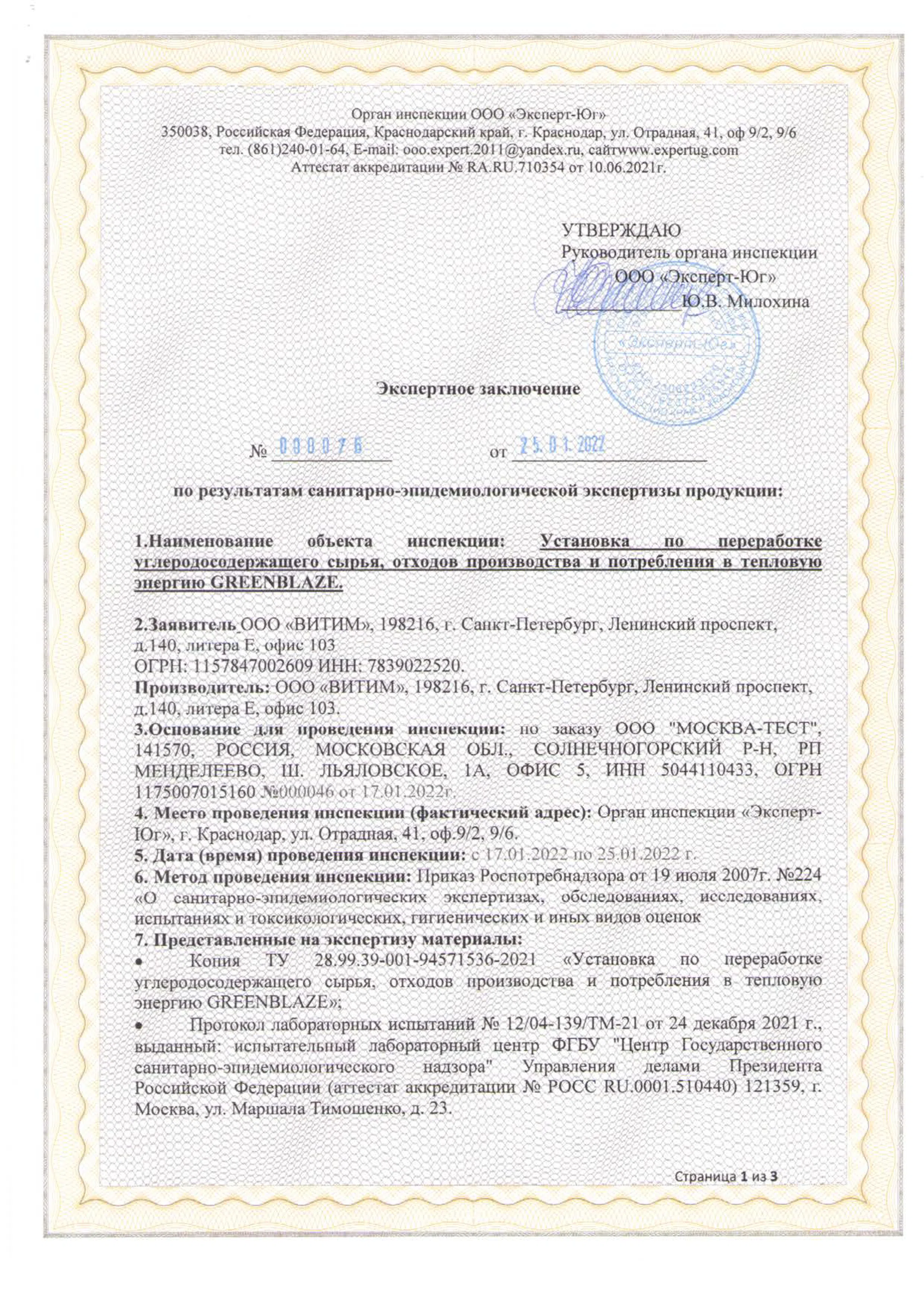
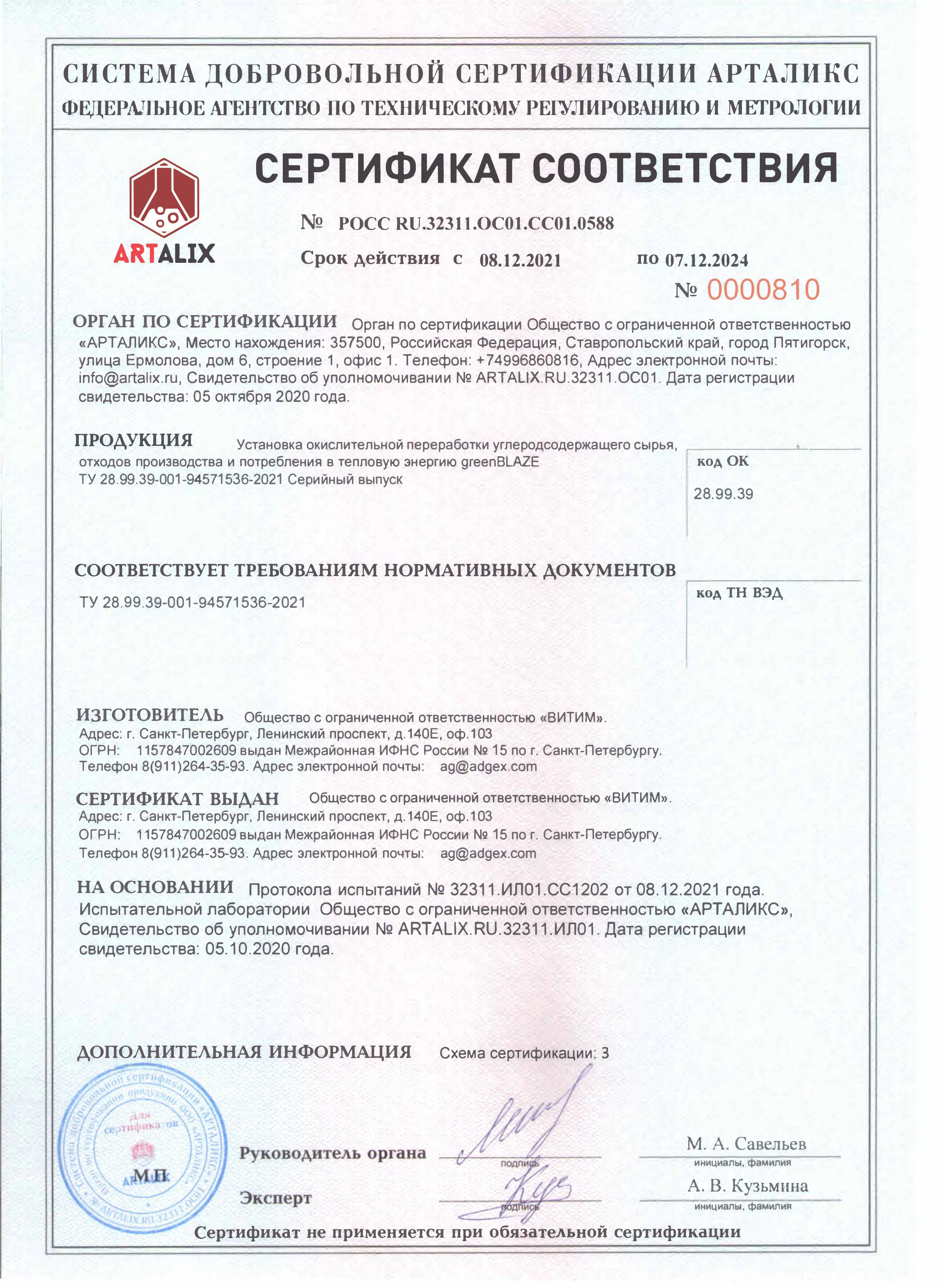
The page includes equipment certification materials: technical specifications, EAEU declaration, sanitary conclusion, and conformity certificate.
How long does it take to reach operating mode?
For a typical configuration, the transition to operational mode is about 12 hours. Full commissioning schedule is defined for each project based on site constraints and selected package.

Example of completed processor