


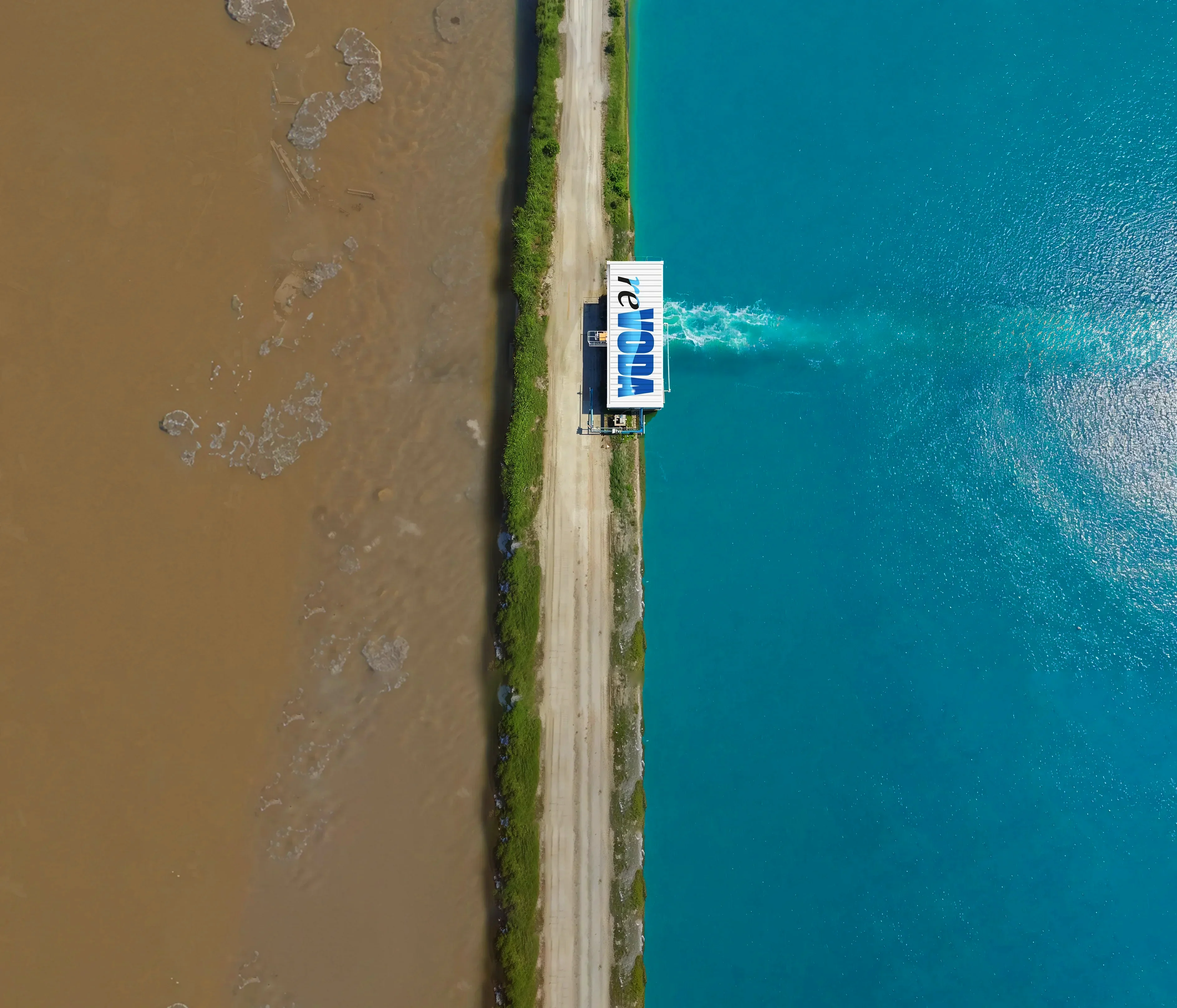


Formation (Plast) Water
WWTP reVODA cleaning and neutralization of recycled formation water

Purification of formation water – challenges and problems of the oil production industry
- Formation water, used in technological cycles during oil production, when exiting the well to the earth's surface, carries a wide range of pollutants, including critical ones, which pose a serious environmental hazard due to long-term environmental pollution.
Main critical pollutants of formation water:
- Highly mineralized salts (chlorides, sulfates, carbonates of sodium, calcium, magnesium);
- Oil-containing compounds (stable emulsions with oil);
- Iron and heavy metals (copper, lead, zinc, etc.);
- Hydrogen sulfide (H₂S), carbon dioxide (CO), and other toxic gases;
- Sulfur-reducing bacteria (anaerobic);
- Chemical reagents used in production (corrosion inhibitors, reagents for hydraulic fracturing, surfactants, biocides).
Environmental risks,which carry untreated formation waters:
- Pollution of groundwater and surface water due to leaks.
- Soil degradation due to spills.
- Danger to biodiversity (death of fish, plants).
- Risk to human health (carcinogens, mutagens).
On average across the industry, the costs of treating formation waters make up 10-15% of the total costs of oil production enterprises.

application of WWTP reVODA – benefits and progressive opportunities in oil production
The reVODA wastewater treatment plant (WWTP) enables oil companies to set up local treatment facilities directly at the site of formation water release, within a small area, capable of neutralizing and purifying formation water for reuse in the reservoir injection process.
Advantages of returning purified produced water to the oil reservoir at reVODA
Cost-effectiveness:
- Reducing water treatment costs – purifying and injecting produced water is cheaper than extracting and treating fresh water.
- Reducing disposal costs – savings on water treatment and transportation for discharge, as well as reducing environmental fees.
- Reduced equipment corrosion – water purification reduces the aggressive impact on pipes and wells.
- Significant area reduction of treatment facilities – significant area reduction due to the elimination of inefficient equipment and the small size of the reVODA treatment facilities .
Technological advantages:
- Microbiological control – preventing the contamination of the productive formation by bacteria that can cause equipment corrosion, the formation of hydrogen sulfide and deterioration of oil quality.
- Improved displacement characteristics – purified water is better compatible with formation fluids.
- Chemical compatibility – eliminating the risk of undesirable reactions due to mixing of formation water with waters of other origins, which leads to precipitation and formation clogging.
- Reduced sediment formation – reduced clogging of collector pores due to the absence of impurities.
Environmental safety:
- Pollution reduction – minimizing the discharge of harmful substances into the environment.
- Pollution reduction – minimizing the discharge of harmful substances into the environment.
- Compliance with legislation – fulfillment of the regulatory requirements of GOST R 58338-2019 for the treatment of oil-containing waters.
ReVODA wastewater treatment and neutralization line
- is the latest market and high-tech approach to the neutralization and purification of formation waters, based on the physical and chemical technology of purification, disinfection and neutralization of wastewater based on the reVODA reactor.

100% guarantee water treatment of recycling produced water:
- Removal of sulfur-reducing bacteria and algae with complete disinfestation of formation waters due to the presence of a large amount of ozone in the active zone of the reVODA reactor and cavitation shocks (shock force up to 250 tons per mm2).
- Neutralization and disposal of toxic gases (hydrogen sulfide and carbon dioxide).
- Removal of iron and heavy metals from formation waters by converting them into insoluble hydroxyl groups.
- Neutralization and removal of sulfates, phosphates, chlorine compounds, acids and salts from formation waters.
- Neutralization of organic compounds, as well as anionic surfactants and surface-active substances, in formation waters.
- Intensification of all separation processes of purification (effluent/mud) with separation of formation waters into sludge and liquid.
- Extraction of suspended and dissolved substances, as well as organic pollutants, from formation waters.
- Maintaining a neutral pH of formation water to prevent corrosion of pipes and wells.
- Neutralization and complete elimination of odors.
- Significant reduction in COD and BOD.
- Значительное снижение ХПК и БПК.
ReVODA reactor – operating principle and design
ReVODA is a closed-field electromagnetic reactor that impacts the wastewater being treated and provides a multiple increase in the rate of the following chemical reactions and physical processes:
- In the working area of the reactor with ferromagnetic particles, a powerful electromagnetic field is created that affects the wastewater being treated.
- Due to the collapse of air bubbles at the gas-liquid separation boundary of the treated wastewater, a shock wave ( cavitation effect) is formed, which changes the molecular structure of the substances being processed.
- Mechanical destruction of organic matter and destruction of pathogenic microflora in the treated wastewater occurs.
- Almost all groups of metals are converted into insoluble compounds (hydroxides) and subsequently removed along with sludge.
reVODA reactor allows for the parallel connection of 1 to 4 reactors into a single line over an area of 2.0 x 2.0 m, providing a wastewater treatment and neutralization capacity of 10 to 60 m3 per hour.

- 1. Corps
- 2. Inductor
- 3. Needles
- 4. Replaceable insert
- 5. Working area of the device
Impacts on treated wastewater in reVODA
- Grinding
- oxidation
- Ion exchange
- Cavitation
- Magnetostriction
- Mechanostriction
Block diagram of the reVODA WWTP

Block diagram of the revoda WWTP:
- 1. Self-priming pump.
- 3. Drum mechanical grate.
- 4. Centrifugal pump.
- 5. Reagent preparation and dosing station.
- 6. Dosing pump.
- 7. Reactor reVODA.
- 8. I&C – control cabinet.
- 9. Ph controller.
- 10. Flotation settling tank.
- 11. Impeller pump.
- 12. Dehydrator.
- 13. Storage tank.
- 14. Centrifugal pump.
- 15. Filtration unit.
- 16. Storage tank.
- 17. Centrifugal pump.
Technical characteristics of the 1st base line of the revoda wastewater treatment plant
- Productivity of the 1st base line of the treatment plant (m³/day): 1 300
- Total peak energy consumption of the WWTP (kWh): 104,6
- Reagent used:
- Reagent type: Dry lime
- Reagent consumption per 1 m3 of wastewater (kg): 10,0
- Requirements for the premises where the wastewater treatment plant will be installed:
- Room area (no more than m2): 126
- Ceiling height (m): 4,5
- Number of service personnel per shift (persons): 2
- Sanitary protection zone (m): 20
- Service life of the treatment plant (at least, years): 15
- (subject to annual service)
- Warranty for wastewater treatment plant equipment (months): 12
Block-module approach for high productivity
Block-modular approach – is a method for increasing the required capacity of formation water treatment facilities by using a multiple number of reVODA basic-configuration treatment lines with a given capacity (blocks - modules).
- Advantages:
- Project scalability due to the number of modules.
- High factory readiness of blocks (up to 90%).
- Flexible and fast delivery, quick installation on site.
- Reduction of construction time for treatment plants.
- Convenience for large and medium-sized projects.
- Practical application:
- The equipment of the 1st basic line of the reVODA treatment plant is placed on the site of the installation of the treatment facilities in a modular manner – in containers or in prefabricated buildings.
- Each block is a complete functional line of wastewater treatment plants with a capacity of 1,300 m3/day.
- The number of prefabricated units ensures the required capacity and performance of the project's treatment facilities.
- Minimal work on site – the blocks are simply mounted on the site. The units can be located either in one place or separately in different places if there is no single large area for treatment facilities.

Certification of WWTP reVODA
- Certificates, specifications, and conclusions for the reVODA wastewater treatment plant are available via link.
- Certification of the reVODA wastewater treatment plant
Contacts
Contact us - we are available 24/7.

Viktor Uzlov
Commercial Director
 Phone
Phone
 Email
Email